Paint correction is one of the most misunderstood services in detailing. Done well, it brings a car back to better-than-new. Done poorly, it shaves years of clear coat off your panels for nothing.
What 'correction' actually means
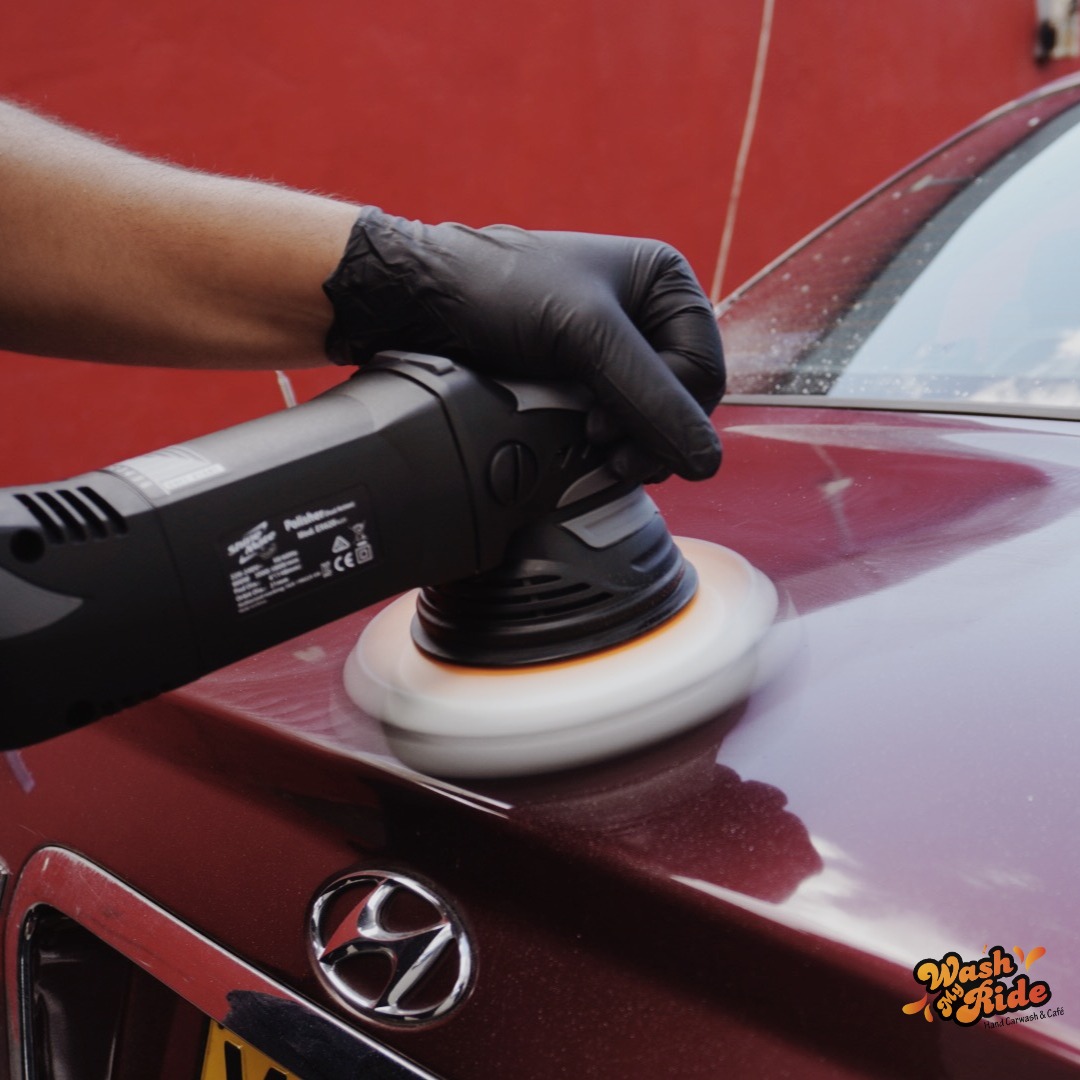
Correction is the controlled removal of a microscopic layer of clear coat to level out defects — swirl marks from poor washing, water spots, light scratches and oxidation. We use a dual-action machine polisher with calibrated pads and abrasives to do it safely.
The three levels
- Single stage — one polishing pass, removes 70–85% of light defects
- Two stage — cuts heavier defects then refines for full gloss
- Show finish — three+ stages, used on rare paint and concours cars
When NOT to correct
If your clear coat is already thin (older car, previously polished aggressively), or the defects are deep enough to catch a fingernail, polishing makes things worse. We measure clear coat thickness before recommending a correction stage.
Protecting the result
Correction without protection is wasted money. The fresh, exposed clear coat needs to be sealed — either with a high-grade wax (short term) or a ceramic coating (long term) — within 24 hours of polishing.